

Listen to our weekly mental health podcast:
“A Little Help For Our Friends”
A podcast by KulaMind, hosted by Founder Dr. Kibby McMahon, created for anyone navigating the mental health or addiction struggles of others. Each episode dives into what’s really going on beneath the surface, why people struggle, how it impacts you, and what can actually help. We cover a range of topics like dealing with toxic relationships, narcissism, boundaries, family dynamics and more, always with warmth, honesty, and expert insight.


Episodes
Ep. 173-The Man-Child Syndrome: The Psychology of Men Who Refuse to Grow Up
In this episode, Dr. Kibby breaks down the psychology behind the "Man-Child Syndrome," when men stay emotionally immature and avoid real responsibility.
Do you know a grown man who clearly wants to stay a boy forever? Maybe he's fun, charismatic, adventurous and creative but...he runs away from adulthood. He's afraid of commitment, avoids responsibilities, and expects everyone else to take care of him. If so, you're familiar with the Man-Child Syndrome.
Dr. Kibby analyzes the "Man-Child" (also called the "Peter Pan Syndrome") and discusses the tell-tale signs of a man-child, what's underneath the boyish behavior, and how psychological theories explain why he refuses to grow up. At the core of this type of toxic immaturity is the avoidance of the hardships of adult life: the tedious work of building a career, the mundane problems of a serious relationship, and the pain of going out of our comfort zones. The Man-Child runs away from any limitations to his freedom and fun, but that usually means he's taking advantage of someone in the process.
This episode also discusses how the Man-Child syndrome is a growing form of narcissism: Men lost in fantasies, too special to suffer like ordinary people, and avoidant of accountability. All of these tendencies point to traits of narcissistic personality disorder, even if it's hard to spot at first.
If you're struggling with a man-child and need support, check out for real skills and community for dealing with this toxic relationship.
Ep. 172-From Toxic Patterns to a Healthy Marriage: 5 Mindset Shifts To Find "The One"
This episode shares five mindset shifts that helped Dr. Kibby stop chasing toxic relationships and finally find a real life partner.
How do you know when you've found "the one"? Disney movies and rom coms aside, how do we even figure out who should we spend the rest of our lives with? Dr. Kibby breaks down the five giant shifts in perspective that led her to the right husband: choosing a partner who can truly care for you “in sickness and in health,” ending the urge to heal childhood wounds by repeating old patterns, prioritizing someone who will be a strong co-parent, and valuing a partner who can reliably handle life’s logistics. If you’ve felt like you’re parenting a grown adult, walking on eggshells, or stuck in the same exhausting cycle, these shifts offer a practical path out- grounded in therapy breakthroughs, grief work, and different choices from day one.

Ep. 155- Enabling: When Helping Our Loved Ones Makes Things Worse
When does our help cross the line from supportive to harmful for our loved ones with mental health challenges? In this episode we dive deep into the complex dynamics of "unintentional reinforcement," a less judgmental term for "enabling" that acknowledges how our best intentions can sometimes backfire.
Drawing from personal experiences with addiction, depression, and avoidance behaviors, we explore how our actions sometimes shield our loved ones from the very consequences that might motivate change. Whether it's financially supporting a partner who refuses to work, making excuses for someone's alcohol abuse, or accommodating anxiety-driven avoidance, these patterns can gradually trap both parties in cycles that feel impossible to break.

Ep. 154- Humiliation: The Spiciest Social Emotion
Humiliation might be the most painful social emotion we experience, even traumatizing. Yet it's much less talked about compared to its cousin, shame. In this revealing episode, we unpack the distinct characteristics that make humiliation uniquely devastating and potentially dangerous.
When someone in a position of power debases you in public, that's not just intense shame- it's humiliation. You simply experience a profound loss of status and dignity. While someone might humiliate you to "teach you a lesson" or make you change, but it only brings up a powerful urge for revenge.
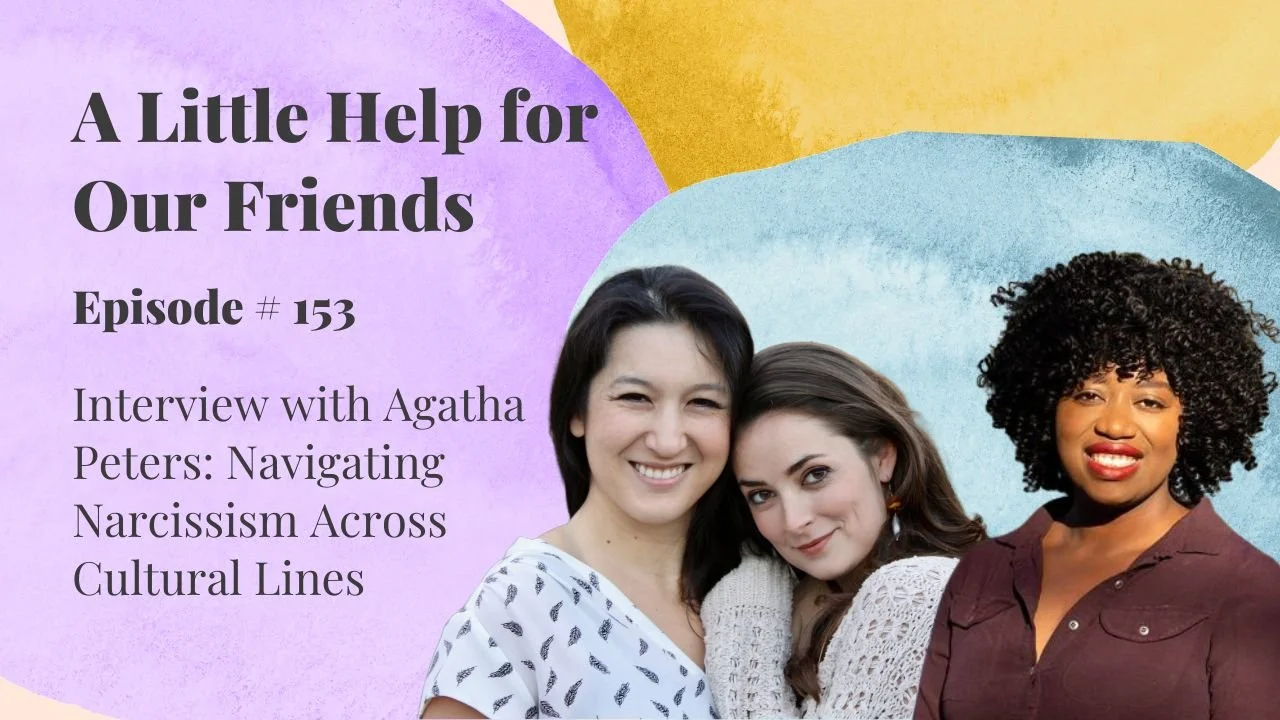
Ep. 153- Interview with Agatha Peters: Navigating Narcissism Across Cultural Lines
What happens when cultural expectations of family loyalty collide with the reality of narcissistic abuse? In this special episode, licensed clinical social worker Agatha Peters brings a fresh perspective to this complex intersection, drawing from her personal journey as a Nigerian-American and her professional expertise working with clients from collectivist cultures.
For those raised in communities where family honor and respect for elders are paramount values, recognizing and addressing narcissistic relationships presents unique challenges that go far beyond standard Western approaches to mental health.
We explore how narcissistic parents in collectivist cultures can weaponize community expectations, creating situations where victims not only face abuse at home but also community reinforcement of harmful dynamics. This creates a devastating cycle where victims are gaslit not just by their abuser but by entire communities who view their complaints as dishonoring family or tradition.
Most powerfully, Peters shares how becoming a mother transformed her understanding of her own experiences. This discussion offered us profound insights into healing while honoring cultural identity. Subscribe now and join the conversation about supporting loved ones through their mental health journeys.
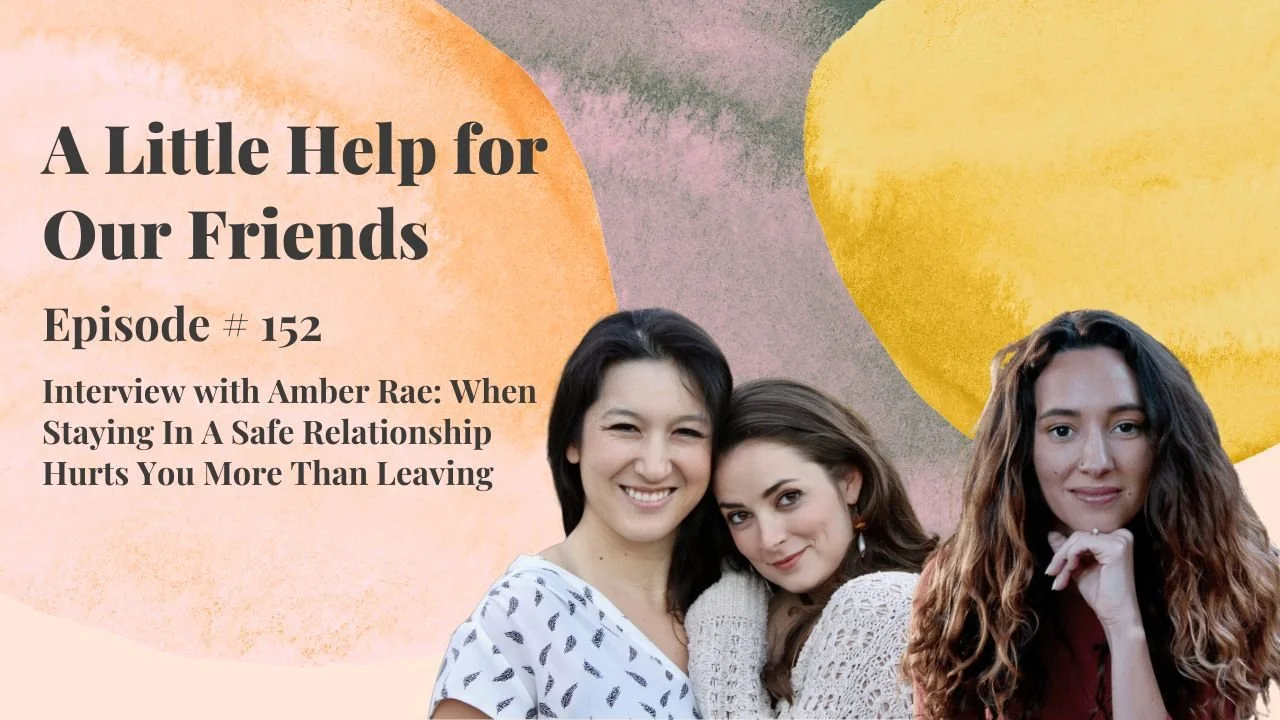
Ep. 152- Interview with Amber Rae: When Staying In A Safe Relationship Hurts You More Than Leaving
What happens when you look into a stranger's eyes and suddenly realize what's been missing from your marriage all along? In this episode, bestselling author Amber Rae joins us to share her transformative journey from a nine-year relationship that checked all the boxes on paper but lacked true intimacy and connection.
Amber's story challenges our conventional understanding of commitment, revealing how we can unknowingly convince ourselves that relationships are working when essential needs remain unmet. "I didn't know I was pretending," she reflects, describing how she repeatedly tried to fix her marriage through therapy, self-help books, and doubting herself. The wake-up call came unexpectedly when she experienced an electric yet calm connection with a stranger that made her question everything.
Ep. 151- Love Island USA Analysis Part 2: The Emotional Intelligence Behind Reality TV Relationships
Now that Season 7 of "Love Island USA" has finished, we're unpacking the fascinating psychological dynamics that made this season so compelling.
In this episode, we discussed how the men of Love Island gave us a masterclass in modern masculinity. In an era where men's mental health is suffering from isolation and loneliness, these bromances offered a refreshing alternative to toxic masculinity. T It turns out that protecting and providing looks different in 2023, and these men showed what's possible when emotional intelligence takes center stage.
The budding romances in the villa gave us fascinating case studies in attachment styles and relationship patterns.
Ep. 150- The Hidden Pain of Rejection: Understanding Rejection Sensitivity Dysphoria and Its Link to ADHD
What happens when criticism feels like a physical blow? For some of you, rejection and criticism trigger an emotional response so intense it has its own name: Rejection Sensitivity Dysphoria (RSD).
In this episode, we deep into the painful world of RSD – that overwhelming feeling of shame and worthlessness that can follow even minor criticism for or rejection. Jacqueline shares a raw, personal story about crying in a supervisor's office following critical feedback, highlighting how even successful people can feel ambushed by the pain of rejection.
What's surprising is that the research shows that RSD is common with neurodivergent people with symptoms of attention deficit hyperactivity disorder (ADHD).
Ep. 149- Love Island USA Analysis Part 1: Untangling Reality TV Relationship Dynamics
Ever wondered what reality TV can teach us about psychology? In this episode, we put our mental health expertise to "work" analyzing the relationship dynamics on the first 17 episodes of Season 7 of "Love Island USA," revealing fascinating patterns that mirror what therapists see in couples therapy every day.
The villa becomes our laboratory as we dissect the pursue-withdraw dynamic playing out between contestants like Ace and Amaya. Watch as we unpack how Ace masterfully maintains emotional distance while keeping women interested. His approach to "boundaries" offers a compelling case study in how this psychological concept can sometimes be misused in relationships.
Have a podcast idea or want to collaborate?
We’d love to hear from you. If you have an idea for a podcast episode, are interested in being a guest, or would like us to join your show - reach out!
